
When your home no longer fits the way your family lives, you have two real options: move or add on. For many Mishawaka homeowners, adding on is the smarter move, and understanding which type of addition fits your home, your lot, and your budget is the first step. This guide breaks down the four most common home addition types so you can walk into that first conversation with a contractor knowing what questions to ask.
Should You Move or Add On?
Moving sounds simple until you price it out. Between real estate fees, closing costs, moving expenses, and the premium you pay to buy a larger home in today’s market, relocating can easily cost more than a well-planned addition. If you like your neighborhood, your schools, and your neighbors, staying put and building out is often the more financially sensible decision.
That said, adding on is not the right choice for every situation. If your lot has very little room to expand, if the home has foundation issues that would complicate new construction, or if you are planning to sell within a year or two, the return may not justify the investment. A good contractor will help you think through those factors honestly before you commit to anything.
The Four Most Common Addition Types
Understanding what each addition type actually involves helps you compare your options accurately rather than going off rough impressions. The four most common approaches for Mishawaka homeowners are bump-out additions, full-room additions, garage conversions, and second-story additions, and each suits a different set of circumstances.
A bump-out is a smaller extension of an existing room, typically pushing out just a few feet to add functional square footage without the cost of a full addition. A full-room addition adds entirely new square footage to your home’s footprint, requiring foundation work, framing, roofing, and all the finishes that come with a new room. Garage conversions transform an attached garage into a conditioned living space, which avoids most foundation and roofing work since the structure already exists. Second-story additions build up rather than out, which is particularly useful when lot size or setback requirements limit how far you can expand at ground level.
How to Pick the Right Type for Your Home
The right addition type is not just about what you want to build. It is about what your property can realistically support. Lot size and local setback requirements in St. Joseph County will determine how far you can expand outward, and your foundation type will affect what kind of addition is structurally practical. An older slab foundation, for example, changes the calculus on certain types of room additions.
Your intended use matters just as much as the physical constraints. A family that needs a bedroom for a teenager has different needs than a homeowner who wants a dedicated home office or a ground-floor laundry room. How long you plan to stay also factors in. Larger investments like a second-story build tend to make more sense if you are putting down roots for the long term, while a bump-out might be the right-sized answer for someone who wants a practical fix without overextending.
Cost Ranges by Addition Type
Home addition costs vary widely depending on scope, materials, and site conditions, so any number you see online should be treated as a starting point rather than a firm figure. That said, general ranges can help you plan. Bump-outs typically run less than a full addition because of their smaller scale and limited structural requirements. Full room additions involve more labor and materials, and costs rise with size. Garage conversions tend to fall in the mid-range since much of the structure is already in place, though insulation, HVAC, flooring, and window work can add up. Second-story additions are generally the most involved and most expensive option because they require structural assessment of the existing home, temporary relocation of roofing, and a full suite of finish work.
A real estimate requires a site visit. Square footage, existing conditions, material selections, and the specifics of your lot all affect what your project will actually cost. Any contractor who gives you a firm price over the phone without seeing the property is guessing.
Typical Timelines by Type
Planning your life around a construction project is easier when you have a realistic sense of how long things take. Bump-outs are generally the fastest, sometimes completing in a matter of weeks once permits are in hand. Full room additions typically take two to four months for construction, with additional time for design and permitting on the front end. Garage conversions can move quickly since the shell of the structure already exists, though the timeline depends on how much mechanical work is involved. Second-story additions take the longest, and a timeline of four to six months from design through final walkthrough is not unusual when you account for structural planning, permitting, and construction.
That four-to-six-month window is a reasonable benchmark for any significant addition project in the Mishawaka area; however, that’s not to say that certain projects won’t encounter unexpected setbacks. Permitting through St. Joseph County takes time, and experienced contractors build that into the schedule rather than treating it as a surprise.
Permits and Zoning in St. Joseph County
Any structural addition to a home in Mishawaka will require permits through St. Joseph County, and skipping that step creates real problems when it comes time to sell or insure your home. Permits exist to protect you, not just to create paperwork. They ensure that the work is inspected and meets current building codes, which matters for structural integrity and safety.
Setback requirements also come into play on any addition that expands your home’s footprint. These rules govern how close a structure can be to your property lines, and they vary based on zoning. A contractor familiar with the Michiana area will know how to pull the right permits and work within local zoning requirements from the start.
What to Expect During a Home Addition
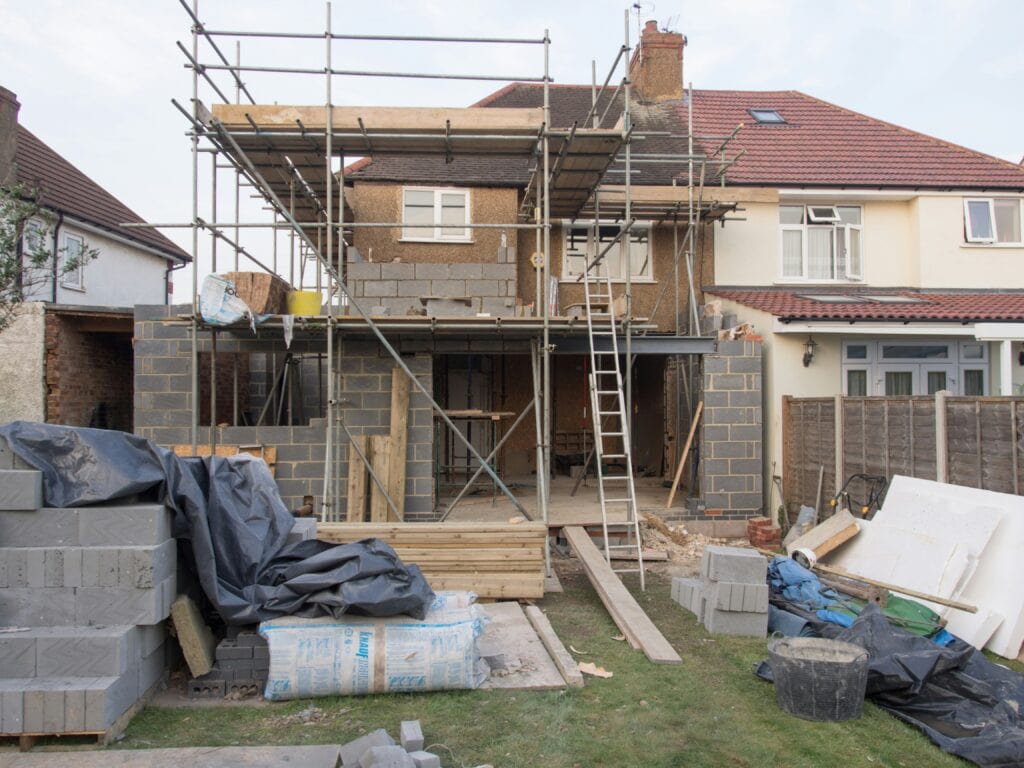
The construction phase of an addition is more disruptive than a typical remodel because it involves work that connects to the existing structure. Depending on the type of addition, you may have periods where exterior walls are opened up, which means weather protection and sequencing matter. A good contractor communicates clearly about what each phase involves, so you are not caught off guard.
Once framing and rough mechanicals are complete, the pace of visible progress tends to pick up. Insulation, drywall, trim, and finishes are where the space starts to feel real. Most reputable contractors will walk you through the process at the start of the job so you know what the milestones are and how decisions along the way affect the schedule.
How Crossroad Construction Approaches Additions
Crossroad Construction is a Mishawaka-based remodeling company that handles home additions throughout the Michiana area. The team works through the planning and permitting process with homeowners, coordinates the trades involved, and focuses on building additions that integrate naturally with the existing home rather than looking like an afterthought.
Contact Us Today!
If you are weighing a home addition in Mishawaka and want to talk through what type makes sense for your home, get a quote or learn more about Crossroad Construction. You can also reach the team by phone at (574) 238-8429.